

 |
| Screenshot from unclutterer.com |
 |
| Before. |
 |
| After. Shelves in place, work space totally clear! |


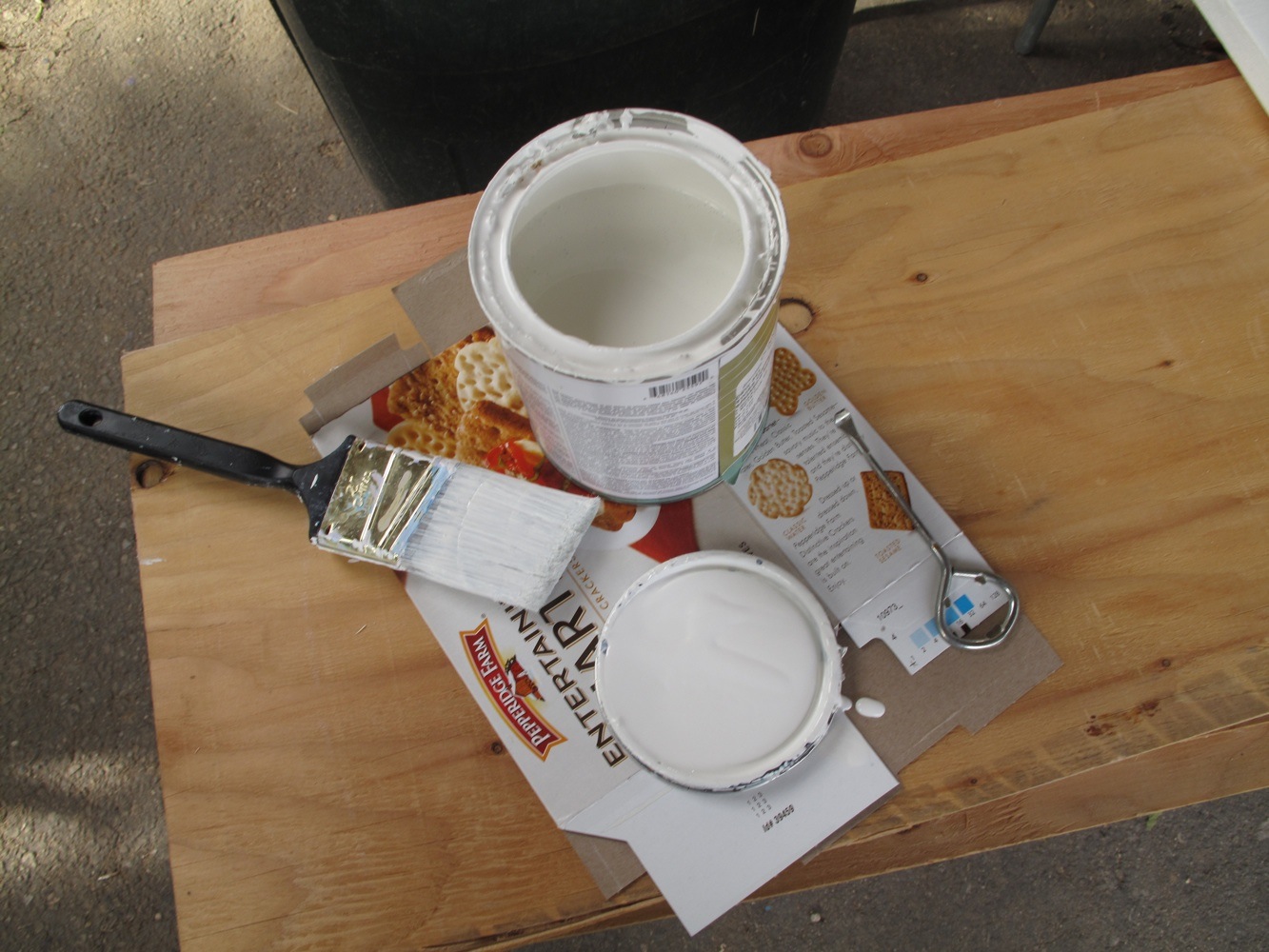


I like to use rubber cement to affix the pieces of my collages because it is fast drying and doesn’t make a big mess. The last time I made a collage, I thought I put the pot of rubber cement in the upper left hand drawer of my desk, where always keep it, but when I went to glue something a few weeks later, it wasn’t there. I spent several minutes looking in each of my desk drawers, then in the art supplies, then in the kitchen drawers. I couldn’t figure out where the rubber cement had gone. I asked the other person who lives in my house. He told me he hadn’t used it or put it anywhere else. I believed him...really! I was frustrated, because I ended up having to tape the thing I wanted to glue.

I didn’t want to buy a new bottle, not so much because of the $1.59 expense, but because I knew I had a bottle and did not want to clutter up my house with a duplicate, since I was sure the one I had misplaced would turn up. I held strong, didn’t buy a replacement, and sure enough, one day I opened the top desk drawer for a paper clip. The orange lettering on the back of the rubber cement bottle suddenly caught my eye. The rubber cement had been put back in the wrong drawer, and I hadn’t ever seen it when I opened up that drawer to look for it. I was relieved, to say the least, and immediately glued the thing I had taped. Much better. But I recalled the lost minutes of my life looking for the thing in the first place. If only I had been present in the moment of putting away the glue and put in its regular drawer, just a few inches to the left of where I tossed it in a hurry to clean up my project mess.
Let’s apply this concept to a specific work place, that of a creative writer. In addition to my professional organizing business I also write fiction, so my desk and work area have to do double duty. It is a place where I accomplish the dozens of different kinds of tasks involved in running a home-based business, as well as where I sit to create stories out of my imagination. Here's how I’ve approached the second half of that equation by addressing the three elements of my work space, and how I would begin to advise someone else doing the same type of creative work with their space:
Work Space: Being comfortable and functional is key. You probably don’t need tons of clear table space, but an ergonomic computer set up is essential. So, the basic fixtures will be a table or desk with computer, keyboard and mouse (all-in-one-printer and back up hard drive are also useful). If you have a desktop computer, get one with a large screen (I have a 24 incher). If you have a laptop, invest in a separate fully functional keyboard and two-button mouse with a scroll wheel, which are faster and easier to use than a small laptop keyboard and track pad. A comfortable, ergonomic chair is possibly the most important thing. Get one that is highly adjustable and sturdy. I recommend desk chairs without arms, as they tend to get broken and in the way. Easy access bookshelves are useful for elements two and three. Good lighting cannot be overemphasized. You should have overhead lighting as well as localized desk lighting to provide softer light. Think about your computer screen, windows and glare when planning your lighting scheme. Noise canceling headphones are a great way to seal out the sounds of the world when you want to immerse yourself in your work.

Lots of dictionaries
Storage Space: Writers tend to have a lot of reading material, paper, and writing implements, so places to store loose paper as well as binders and notepads are necessary. Books go on bookshelves. Enclosed desk drawers are a great place to keep empty notebooks and office supplies. File cabinets for drafts, articles, story ideas, interviews, contracts, PR, etc. are essential, though if you like to have notes within your reach or line of sight, then a bulletin board or desktop stacking trays are a good additional option. Dictionary, thesaurus, other reference materials also go in the bookcase. Depending on the amount of research for each book or story a separate box for reference material may be needed. You want to keep your current projects closest to your work area. You will likely have tons of information, bookmarks etc. on your computer as well that should be labeled according to project and backed up frequently on an external hard drive.
Stimulating Space: While people vary in terms of how much busyness they want in their line of sight when they write, I think a pleasant color on the walls, some art and a few favorite books within arm’s length is a good start. If you want to get crazy, you can put some inspiring quotes on a bulletin board, put up some photos of loved ones or yourself doing writerly things like going to conferences, book fairs, signings, and with other authors. I like the idea of drawing or finding a picture that represents to you what your project will look like when it’s done—whether it’s a drawing of you accepting an award, selling your book or an idea for what it looks like when it comes off the press, putting your visualizing into tangible, pictorial form can be very powerful.
Over time, we’ll continue exploring how breaking down the three elements of any work space can help give us a lens through which to improve organization and inspire creativity.
Creative commons photo posted to Flickr by General Wesc
Lelah Baker-Rabe is a Los Angeles-based professional organizer. To discuss your organizing needs, call her at 818.269.6671 or email lelah@lelahwithanh.com
This drawer is pretty organized and has a bunch of the recommended items.
The 12 things that should be in every top desk drawer:
These are the things we use all the time, need almost every day, and are real time savers when we have them at our fingertips. Trying to keep only those items we use every day will make it easier to find things . I’m sure there are other tools you swear by in your desk drawers. Feel free to add more in the comments.
Creative Commons desk drawer photo posted to flickr by Mickelodeon
Lelah Baker-Rabe is a Los Angeles-based professional organizer. To discuss your organizing needs, call her at 818.269.6671 or email lelah@lelahwithanh.com


