


Besides the noble art of getting things done, there is the noble art of leaving things undone. The wisdom of life consists in the elimination of non-essentials. ~Lin YutangThis is something I have to remind myself...getting lots of things done is not as important as getting the right things done. I love the phrase "elimination of non-essentials;" it reminds of me of Strunk and White: "Omit needless words."

I think my blog posts are all too long, so here’s a shot at making a short, image-heavy one by showcasing some great photos of people’s organizing tools and solutions from flickr.
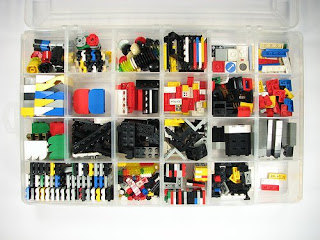
Ultra organized Legos by oskay


To me, working clean means keeping your workspace in an ordered condition as an integral part of the motions of your work, allowing you to work more quickly and efficiently. In David Allen’s Getting Things Done, he writes about the Productive State, “a condition of working, doing, and being in which the mind is clear and constructive things are happening.” Working clean relates directly to keeping one’s mind clear. It isn’t enough to have your desk space physically clear of paper, trash and knick knacks, your mind must be clear and free of errant thoughts in order to be productive on your immediate task. Allen writes “clearing the mind and being flexible are key.” I’d argue that working clean, when employed as your default mode, makes flexibility possible. A working clean workspace refers to a dynamic and fluid space from which you are able to adapt and react to things as they come up.
This concept is adapted from something that has stayed with me for years since I read Anthony Bourdain’s fascinating Kitchen Confidential. In it, he talks about how the best line cooks are the ones that work clean, keeping their station free from food drips and spills (and sometimes blood) and bare of anything except what they need in that moment to get the dish made and out to the table as soon as possible. For them, it is a necessity when juggling hundreds of meals in a few hours, and to keep them safe(r) from accidents.

Bourdain also talks about a chef’s mise en place, and how the specific layout of tools and ingredients is specific to each chef. The repetition of a kitchen requires a line cook to rely on his mise en place. Anybody who works in the same space day in and day out, whether it be at a computer, a cash wrap, a classroom or a car has their own mise en place whether they realize it or not. In my brief waitressing career I felt naked if I went out to wait tables without three pens, the day’s specials written in my server’s shorthand inside my order book, and a clean cloth placed in the same pockets of my apron every time.
Think about working clean and what that means for you. Would you take out only what materials you are working on in a given moment and put them away when you move on to something else? Would you want a perfectly clear space so you could project your ideas and creativity freely onto it? Would you want your computer desktop clear of all icons except what you were working on that day? Try incorporating it into you daily routine and see what happens.


